Background
The internet has gone through several major transformations. It started with simple websites, then evolved into social media platforms that changed how humans communicate. Today, we are entering a new phase where digital interaction is becoming more immersive, intelligent, and integrated into daily life.
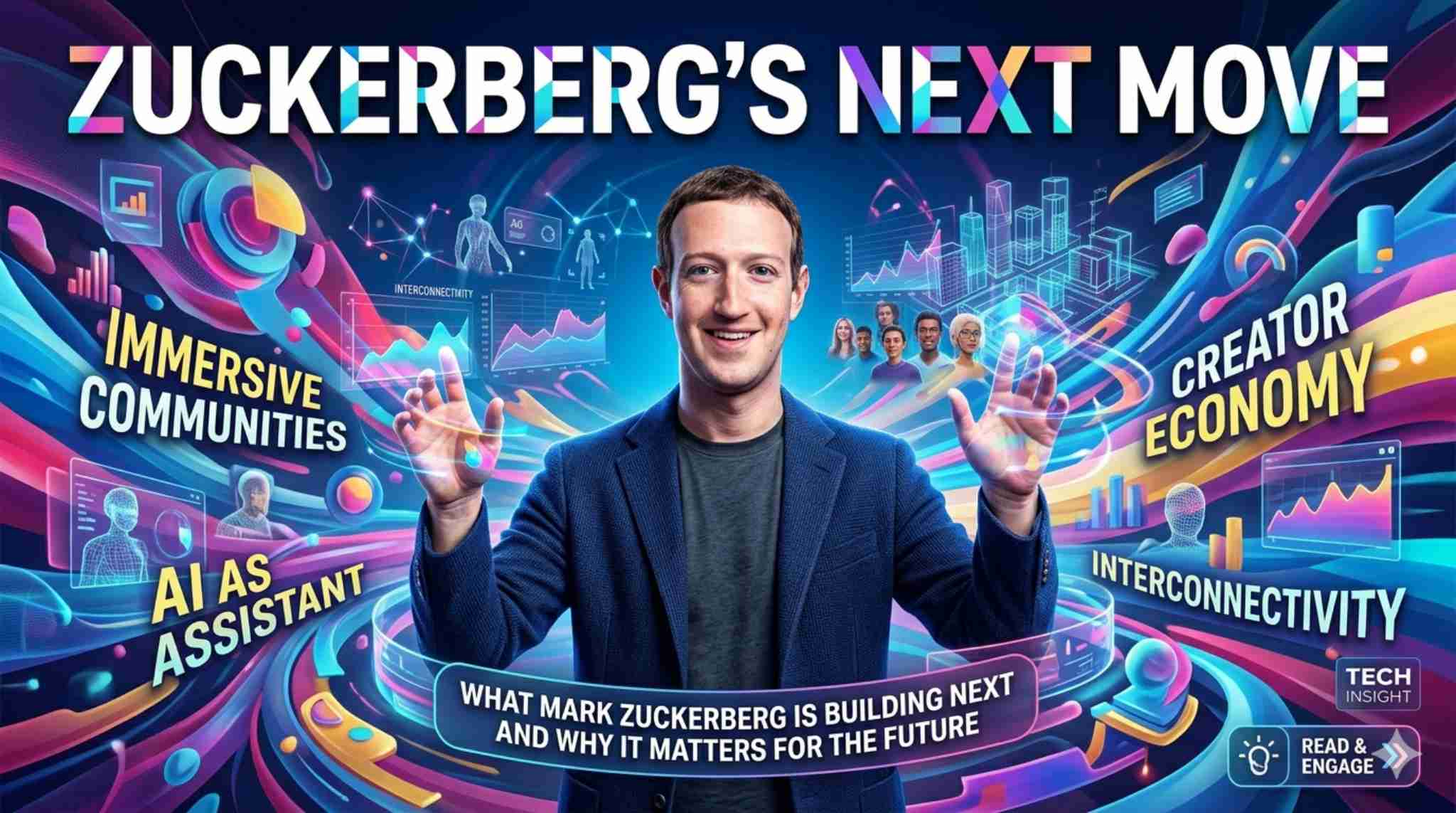
One of the key figures leading this transformation is Mark Zuckerberg, CEO of Mark Zuckerberg and founder of Meta. His company is no longer just focused on Facebook or Instagram, but on building the next generation of the internet.
Main Discussion
1. From Social Media Platforms to a Digital Ecosystem
Meta started as a social media company with Facebook. Over time, it expanded into Instagram, WhatsApp, and other communication tools. However, the long-term vision of the company has shifted dramatically.
Now, Meta is positioning itself as a technology ecosystem company, not just a social network.
This means Meta is building tools that go beyond posting content or messaging friends. It is focusing on creating an environment where digital life becomes as important as physical life.
The biggest example of this shift is the development of the metaverse.
2. Understanding the Metaverse in Real Terms
The metaverse is often misunderstood as just a gaming world or virtual reality space. In reality, it is a much broader concept.
The metaverse is a fully immersive digital environment where users interact using avatars in 3D spaces powered by virtual reality (VR) and augmented reality (AR).
Instead of looking at a phone screen, users enter a digital world through devices like VR headsets.
In practical terms, this means:
- You can attend meetings in a virtual office instead of Zoom
- You can learn in a virtual classroom with interactive objects
- You can shop in 3D digital stores and try products virtually
- You can attend concerts or events without physical travel
- You can socialize with friends in immersive environments
This is a shift from 2D internet (screens) to 3D internet (experiences).
3. Why Meta Is Betting Big on This Future
Meta is investing billions of dollars into VR and AR hardware, such as headsets and smart glasses. The reason is simple: they believe the next generation of computing will not be based on smartphones, but on immersive devices.
There are three major reasons behind this strategy:
(1) Control of the Next Platform
In technology history, whoever controls the platform controls the ecosystem.
- Microsoft controlled the PC era
- Apple and Google dominate the mobile era
- Meta wants to lead the immersive era
(2) Attention Shift
People are spending more time in digital environments. Meta wants to capture that attention in a deeper way than scrolling feeds.
(3) New Economy Creation
The metaverse is not just about interaction—it is also about economy. Digital goods, virtual real estate, and online services could become major industries.
4. The Role of Artificial Intelligence in Meta’s Vision
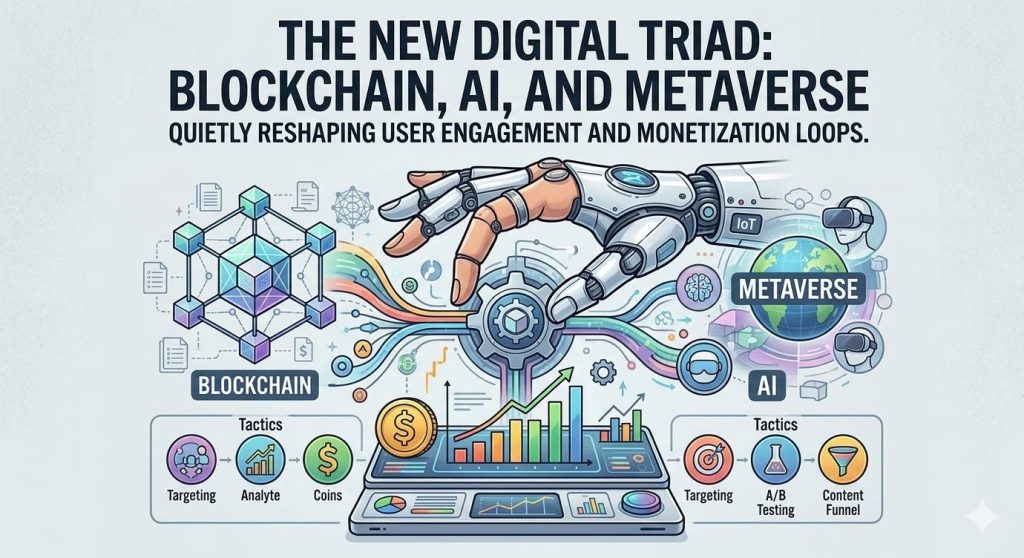
Alongside the metaverse, artificial intelligence is becoming a core pillar of Meta’s strategy.
AI is not just an add-on feature—it is the engine that makes the entire system work.
Meta uses AI for several purposes:
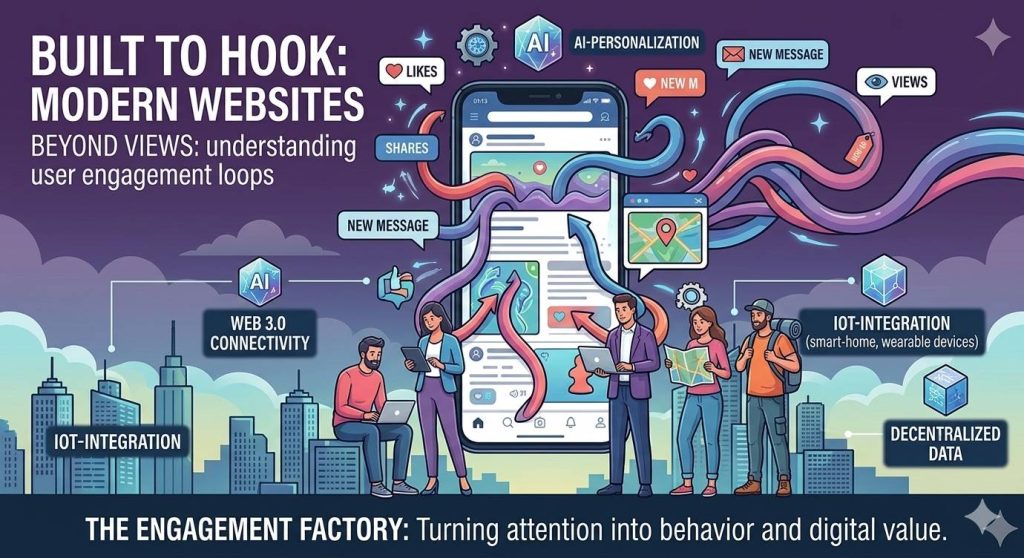
Personalized Content
AI analyzes user behavior and shows content that matches individual preferences.
Content Creation Tools
Users can generate text, images, and ads using AI instead of manual creation.
Business Advertising Optimization
AI helps companies run better ads by automatically testing and improving performance.
Virtual Assistants
Future digital environments will include AI assistants that help users navigate virtual worlds.
This means the internet will become more adaptive and intelligent, responding to users instead of just displaying static content.
5. The Shift from Web 2.0 to the Next Internet Stage
To understand Meta’s direction, it helps to see how the internet has evolved:
Web 1.0
- Static websites
- Read-only information
- No interaction
Web 2.0
- Social media platforms
- User-generated content
- Interaction and sharing
Web 3.0 / Future Internet
- AI-powered systems
- Immersive 3D environments
- Digital ownership and experiences
Meta is trying to position itself at the center of this next phase.
6. Real Impact on Daily Life
If Meta’s vision becomes mainstream, it will affect almost every part of human life:
Education
Students may attend virtual classrooms instead of physical schools.
Work
Remote work may evolve into virtual offices where colleagues appear as avatars.
Entertainment
Movies, games, and concerts may become fully interactive experiences.
Social Life
Friendships may be maintained through virtual environments instead of only messaging apps.
This means the line between physical and digital life will become increasingly blurred.
Conclusion
Mark Zuckerberg’s vision for Meta is not simply about improving social media platforms. It is about building an entirely new layer of the internet where humans interact in immersive, intelligent digital environments.
If successful, this transformation will represent one of the biggest technological shifts in human history—moving from screen-based interaction to experience-based digital living.
The combination of metaverse technology and artificial intelligence could redefine education, business, entertainment, and social interaction in ways we are only beginning to understand.
In short, we are not just witnessing the evolution of social media—we are witnessing the early stages of a completely new digital civilization.