Background
Over the last decade, the internet has transformed from a communication platform into a massive digital business ecosystem. Social media platforms such as Facebook and Instagram are no longer used only for entertainment, chatting, or sharing personal moments. Today, these platforms have become powerful digital environments where businesses, creators, entrepreneurs, and even ordinary users can generate real income from online traffic and audience attention.
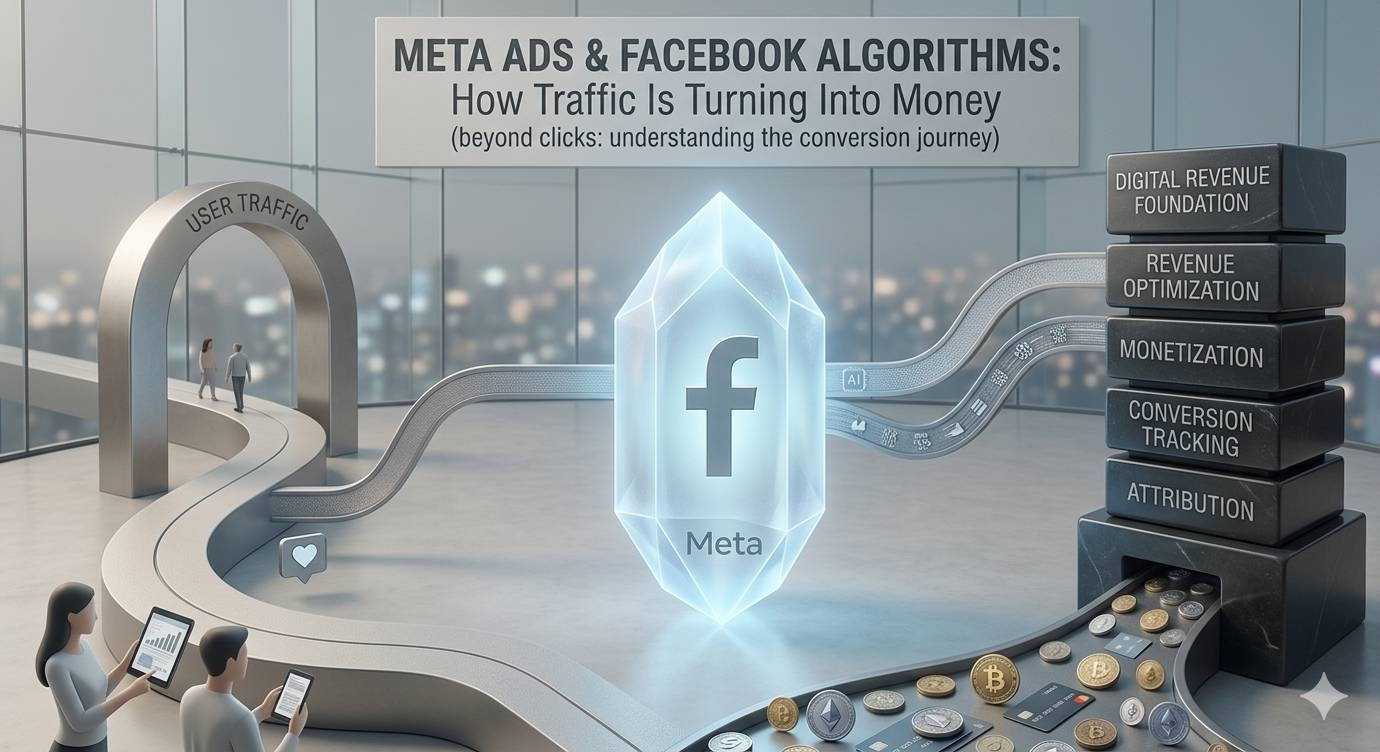
One of the biggest reasons behind this transformation is the development of Meta Ads and Facebook’s algorithm system. Meta, the company behind Facebook and Instagram, has built one of the most advanced digital advertising systems in the world. Millions of businesses now rely on Meta Ads because the platform allows advertisers to reach highly targeted audiences based on behavior, interests, demographics, and online activity.
At the same time, Facebook’s algorithm has fundamentally changed how information spreads online. Content is no longer shown randomly. Instead, algorithms now decide what users see, what becomes viral, and which posts receive the most visibility. This system has created a digital economy where views, clicks, engagement, and traffic can directly become financial opportunities.
As a result, businesses today are no longer competing only through products or services. They are also competing for attention, visibility, engagement, and audience retention in the increasingly crowded digital world.
Main Discussion
1. What Exactly Is Meta Ads?
Meta Ads is a digital advertising platform developed by Meta, the parent company of Facebook and Instagram. This platform allows businesses and individuals to create paid advertisements that appear across Meta’s ecosystem, including:
- Messenger
- Audience Network
Unlike traditional advertising methods such as television commercials or newspaper advertisements, Meta Ads uses intelligent targeting systems powered by algorithms and user data.
This means businesses can specifically target users based on:
- age
- gender
- location
- hobbies
- online behavior
- shopping activity
- interests
- device usage
- engagement patterns
For example, a sneaker business can advertise only to users who:
- are interested in fashion
- recently searched for shoes
- frequently interact with sneaker-related content
- follow fashion influencers
This level of targeting makes Meta Ads extremely powerful because advertisements become far more relevant to users.
Instead of showing ads to random audiences, Meta attempts to display advertisements to people who are most likely to interact, click, or purchase.
This is one reason why Meta Ads has become one of the most widely used digital marketing systems in the modern business world.
2. How Facebook’s Algorithm Controls Visibility
One of the most important systems behind Facebook and Instagram is the algorithm itself.
The Facebook algorithm constantly analyzes enormous amounts of user behavior every second. The system studies:
- what users watch
- how long they watch
- what they like
- what they comment on
- which posts they share
- which videos they replay
- what they search for
- how often they interact with certain accounts
Based on this information, the algorithm predicts what content users are most likely to engage with.
The primary goal of the algorithm is simple:
keep users active on the platform for as long as possible.
This is why highly engaging content often performs better.
For example:
- emotional videos
- controversial discussions
- entertaining reels
- short-form content
- trending topics
usually receive significantly more visibility because they increase user engagement and watch time.
The longer users stay on Facebook or Instagram, the more advertisements Meta can display. This is one of the biggest reasons why engagement has become incredibly valuable in the digital economy.
Modern algorithms are no longer passive systems. They actively shape user experiences, digital behavior, and even online trends.
3. Why Traffic Has Become More Valuable Than Ever
In the modern digital world, traffic is no longer just a number on a screen.
Traffic now represents:
- attention
- visibility
- audience interest
- engagement potential
- business opportunities
This is why internet traffic can directly generate income.
For businesses, more traffic often means:
- more potential customers
- more product exposure
- more conversions
- more sales opportunities
For content creators, traffic can lead to:
- monetization
- sponsorships
- affiliate commissions
- brand partnerships
- advertising revenue
Today, many people are building entire careers based on online traffic.
For example:
- YouTubers earn from views and advertisements
- affiliate marketers earn commissions from clicks
- online stores use Meta Ads to increase sales
- influencers monetize audience attention
- website owners generate advertising revenue from visitors
This has created a digital economy where attention itself has financial value.
In many ways, businesses today are not only selling products anymore.
They are competing for attention.
4. Why Meta Ads Is Becoming Increasingly Popular
One major reason Meta Ads is growing rapidly is accessibility.
In the past, advertising often required:
- large budgets
- expensive television commercials
- printed banners
- physical campaigns
Today, even small businesses can run advertisements directly from smartphones or laptops.
A small online shop can spend a relatively small amount of money and still reach thousands of targeted users.
This creates huge opportunities for:
- startups
- freelancers
- content creators
- affiliate marketers
- local businesses
- personal brands
Meta Ads is also highly measurable.
Businesses can analyze:
- clicks
- conversions
- audience engagement
- advertising performance
- customer behavior
- campaign effectiveness
This allows advertisers to optimize campaigns much more efficiently compared to traditional marketing methods.
As a result, digital advertising is becoming increasingly important in the modern business landscape.
5. Facebook Pro and the Rise of Creator Monetization
Facebook itself is also changing.
In the past, Facebook was mainly a social networking platform used for communication and entertainment. Today, many users are turning Facebook into a digital business platform.
Facebook Pro and monetization systems now allow creators to potentially earn money through:
- video views
- audience engagement
- advertisements
- reels performance
- subscriptions
- bonus programs
This transformation has encouraged more people to:
- create short videos
- build personal brands
- produce viral content
- grow online audiences
Many creators now combine:
- Facebook pages
- Meta Ads
- affiliate marketing
- reels content
- monetized traffic
to create digital income streams.
As a result, social media platforms are increasingly becoming part of the global digital economy.
6. The Future of Digital Advertising and Online Business
The future of digital business will likely become even more connected to:
- artificial intelligence
- personalized advertising
- automation systems
- machine learning
- algorithm-based marketing
Modern advertising systems are becoming increasingly intelligent.
AI-powered algorithms can now:
- analyze user behavior
- optimize advertisements automatically
- predict engagement patterns
- improve audience targeting
This means businesses may become more:
- data-driven
- automated
- algorithm-focused
- personalization-oriented
However, this also raises important concerns regarding:
- privacy
- excessive data collection
- digital addiction
- algorithm manipulation
- online behavioral influence
As technology continues evolving, understanding how Meta Ads and algorithms operate may become one of the most important skills in the modern digital economy.
Conclusion
Meta Ads and Facebook algorithms are fundamentally transforming how businesses, creators, and individuals generate income in the digital era. Social media platforms are no longer only communication tools — they have evolved into highly sophisticated digital ecosystems where traffic, engagement, and attention can directly create financial opportunities.
Meta Ads allows businesses to target audiences with incredible precision, while Facebook’s algorithm controls what users see and interact with online. Together, these systems shape the modern internet economy where visibility and audience attention have become highly valuable assets.
Today, many people are building businesses, careers, and personal brands entirely through digital platforms and online traffic. As technology continues advancing, algorithms, artificial intelligence, and digital advertising systems will likely become even more influential in shaping the future of online business and digital society.