Background
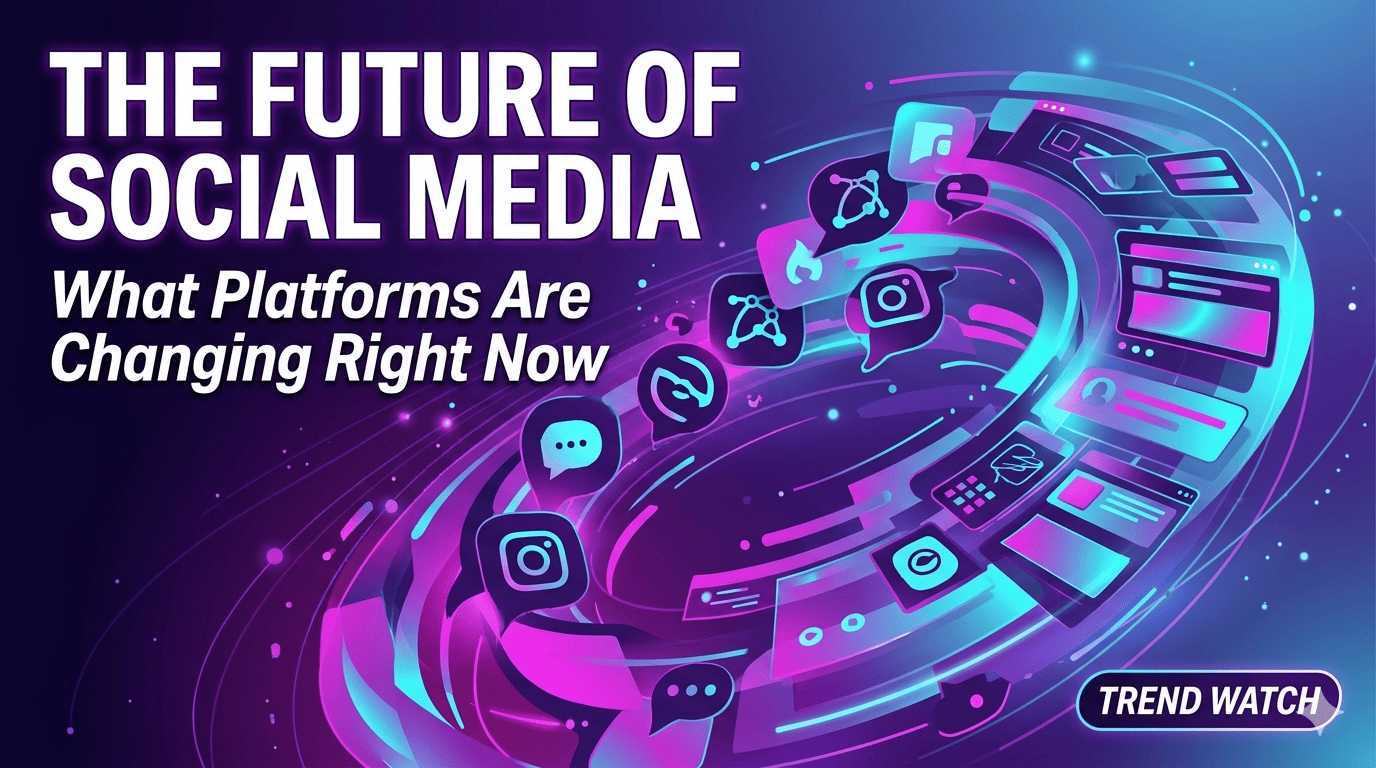
Social media has become one of the most powerful forces in the digital era. It is no longer just a place to connect with friends, but a global system that influences communication, business, entertainment, and even politics.
In the early days, platforms like Facebook and Twitter were mainly used for text updates and simple photo sharing. However, over time, social media evolved into a highly complex ecosystem driven by algorithms, short-form video content, and artificial intelligence.
Today, platforms are competing not only for users, but for attention itself. The longer a user stays on a platform, the more valuable that platform becomes.
Because of this competition, social media is changing faster than ever before.
Main Discussion
1. The Rise of Short-Form Video Dominance
One of the biggest transformations in social media is the shift toward short-form video content.
Platforms like TikTok have completely changed user behavior. Instead of reading long posts or watching lengthy videos, users now prefer fast, engaging content that delivers value within seconds.
This change has created a new standard in digital content consumption:
- Videos must capture attention within 1–3 seconds
- Content must be simple, fast, and emotional
- Entertainment value is more important than complexity
As a result, major platforms had to adapt quickly:
- Instagram introduced Reels
- YouTube launched Shorts
- Facebook shifted toward video-first feeds
This shows a clear direction: video is now the dominant content format.
The reason is simple—human attention span has decreased significantly due to digital overload, and platforms are optimizing for it.
2. Algorithms Now Control What People See
In the past, social media content was shown chronologically or based on followers. If you followed someone, you saw their posts.
Today, that system is gone.
Now, algorithms decide everything.
Modern social media platforms analyze thousands of data points, such as:
- Watch time (how long users stay on a video)
- Engagement (likes, comments, shares)
- Rewatch behavior
- User interests and activity history
Based on this data, platforms decide which content should go viral.
This creates a major shift:
👉 You no longer need followers to go viral
👉 You need good content performance
This is why new creators can suddenly get millions of views overnight.
However, it also makes the system highly competitive because content quality matters more than ever.
3. Artificial Intelligence Is Reshaping Social Media
Artificial intelligence is now deeply integrated into almost every social media platform.
AI is used for several key functions:
Content Recommendation
AI decides what users see on their feed based on behavior patterns.
Content Creation Assistance
AI tools can now help users:
- Write captions
- Generate video scripts
- Edit videos automatically
- Create images and thumbnails
Trend Prediction
AI systems detect rising trends before they become viral.
Personalized Experience
Each user sees a completely different version of the platform based on their preferences.
This means no two users experience social media in the same way anymore.
4. Social Media Is Becoming an Entertainment Engine
Another major shift is that social media is no longer just about communication. It has become an entertainment-first system.
Users now open apps not to talk, but to:
- Watch videos
- Discover content
- Follow trends
- Get entertained instantly
This is why platforms are competing heavily with traditional entertainment industries like TV and streaming services.
In many cases, TikTok and YouTube are now more influential than television.
5. The Rise of Social Commerce
Social media is also merging with online shopping.
This trend is known as social commerce, where users can:
- Discover products through content
- Click and buy directly inside apps
- Trust influencers instead of advertisements
For example:
- A TikTok video shows a product
- Users click the link
- They purchase instantly without leaving the app
This removes the traditional separation between content and commerce.
Now, content itself becomes a sales engine.
6. The Future Direction of Social Media
Based on current trends, social media is moving toward three major directions:
(1) Fully AI-Driven Platforms
AI will manage most of the content recommendation and creation process.
(2) Video-First Ecosystem
Short-form and interactive video will dominate all platforms.
(3) Integrated Business Systems
Social media will fully integrate:
- Shopping
- Advertising
- Content creation
- Monetization
In the future, social media will not just be a place to scroll—it will be a place to live digitally.
Conclusion
Social media is evolving from simple communication platforms into powerful AI-driven ecosystems that control attention, influence behavior, and drive global digital economies.
The rise of short-form video, algorithm-based content distribution, and artificial intelligence has completely changed how content is created and consumed.
In the future, social media will become even more personalized, immersive, and economically integrated. It will not only shape entertainment but also redefine how businesses grow and how people earn income online.
We are currently witnessing the transition from traditional social networking into a fully intelligent digital attention economy.