Background
The internet has changed dramatically over the past decade. In the early days of the web, websites were mainly designed to display information as clearly as possible. Most websites focused on simple layouts, readable text, and basic navigation systems. Their main purpose was straightforward: helping users find information quickly.
However, modern websites are very different today.
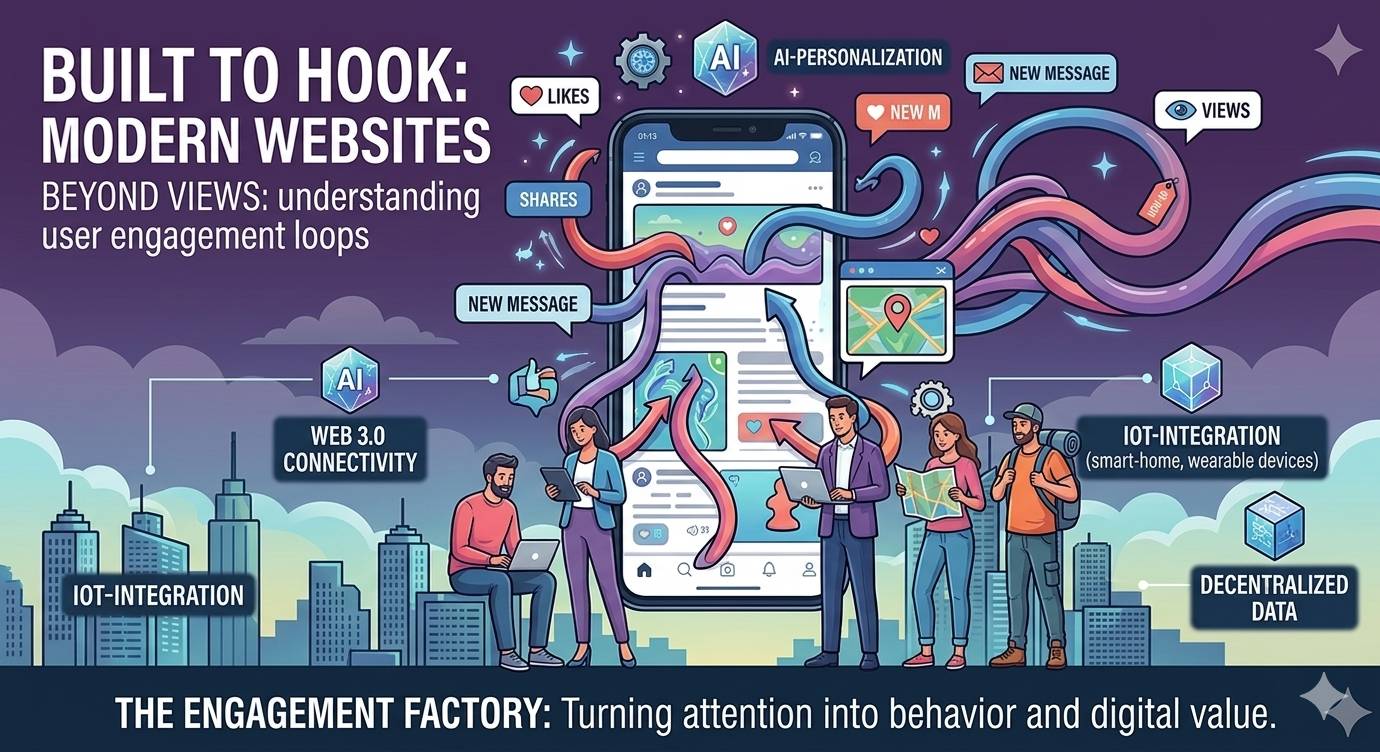
As technology evolves, websites are no longer built only to be visually attractive or informative. Instead, many modern platforms are carefully designed to keep users staying longer, scrolling further, clicking more content, and continuously interacting with the platform.
This transformation is heavily influenced by modern digital business strategies, social media behavior, data analytics, and psychological design principles. Large technology companies now invest massive amounts of money into user experience research, algorithm systems, and behavioral analysis to understand how people interact with digital platforms.
Today, websites are competing not only for visitors but also for user attention.
This is why many modern platforms such as social media, streaming services, online stores, and content websites are becoming increasingly addictive and engagement-focused. Behind their simple appearance, there are advanced systems quietly working to keep users active for as long as possible.
Main Discussion
1. Modern Websites Are Designed Around User Attention
In today’s digital era, attention has become one of the most valuable assets on the internet.
The longer users stay on a website, the more opportunities platforms have to:
- display advertisements
- collect data
- increase engagement
- generate revenue
- promote products or services
Because of this, many websites are now designed using “attention-driven” systems.
This is why platforms today focus heavily on:
- endless scrolling
- personalized recommendations
- autoplay videos
- dynamic notifications
- interactive content
- algorithm-based feeds
These features are specifically created to encourage users to continue interacting with the platform.
Social media platforms such as Facebook, Instagram, TikTok, and YouTube are among the biggest examples of this strategy. Their systems continuously analyze user behavior to determine what content should appear next.
2. Algorithms Quietly Control What Users See
Modern websites are no longer fully controlled by users themselves. Instead, algorithms now play a major role in shaping the digital experience.
Algorithms analyze:
- watch time
- clicks
- likes
- comments
- shares
- browsing behavior
- interests
- interaction patterns
Using this data, platforms decide which content is most likely to keep users engaged.
This is one reason why users often spend far more time online than they originally planned.
Recommendation systems are becoming increasingly intelligent. Platforms can now predict what users may want to watch, read, or purchase based on previous activity.
As a result, websites today feel more “personalized” than ever before.
However, this personalization also raises important questions regarding:
- digital addiction
- data privacy
- algorithm manipulation
- online behavior control
Many people do not realize how strongly algorithms influence their daily digital habits.
3. Simplicity Is Often More Powerful Than Complexity
One interesting trend in modern web development is minimalism.
Many successful platforms today appear visually simple, but behind that simplicity are highly advanced systems.
Companies such as Google, Apple, Airbnb, and Notion focus heavily on:
- clean layouts
- smooth interactions
- fast loading speed
- intuitive navigation
- user-friendly interfaces
This is because modern websites are no longer designed only for appearance. They are optimized for user retention and experience.
Research shows that users often leave websites quickly if:
- pages load too slowly
- layouts feel confusing
- navigation becomes difficult
- interfaces appear overwhelming
Because of this, modern web developers now prioritize:
- speed optimization
- responsive design
- accessibility
- mobile-first development
- user experience (UX)
In many cases, a simple but fast website performs better than a visually complex website.
4. Data Has Become the Core of Modern Websites
Most modern websites today are powered by data systems.
Every interaction users make online can become valuable information for platforms and businesses. Websites continuously collect data to understand:
- user behavior
- engagement patterns
- interests
- purchasing habits
- browsing activity
This data helps companies improve:
- advertisements
- recommendations
- personalization
- digital marketing strategies
Large technology companies rely heavily on data-driven systems because understanding users allows platforms to increase engagement and revenue more effectively.
This is why many websites today feel highly personalized.
For example:
- streaming platforms recommend movies
- online stores suggest products
- social media platforms recommend content
- search engines predict user intent
All of these systems are powered by data analysis and machine learning technologies.
5. The Future of Websites Is Becoming More Intelligent
Modern websites are increasingly integrating technologies such as:
- artificial intelligence
- automation
- machine learning
- cloud computing
- real-time personalization
AI-powered chatbots, recommendation engines, and automated systems are becoming common across websites and digital platforms.
In the future, websites may become even more adaptive and intelligent. Platforms could potentially predict user behavior more accurately and create highly personalized digital experiences automatically.
At the same time, developers and businesses will face new challenges regarding:
- privacy
- ethical technology
- user trust
- digital well-being
As websites become more advanced, balancing technology and responsible digital design will become increasingly important.
Conclusion
Modern websites are no longer built only to display information or look visually attractive. Today, they are carefully designed to capture attention, increase engagement, and keep users interacting for as long as possible.
Behind simple interfaces and smooth designs, advanced systems such as algorithms, data analysis, artificial intelligence, and behavioral tracking are constantly shaping the modern digital experience.
This transformation has changed how businesses operate, how users consume content, and how developers build digital platforms. Attention, engagement, and user behavior have become central elements of the modern internet economy.
As technology continues evolving, websites will likely become even smarter, more personalized, and more deeply integrated into everyday life. Understanding how modern websites operate is becoming increasingly important in a world where digital experiences influence nearly every aspect of human behavior.