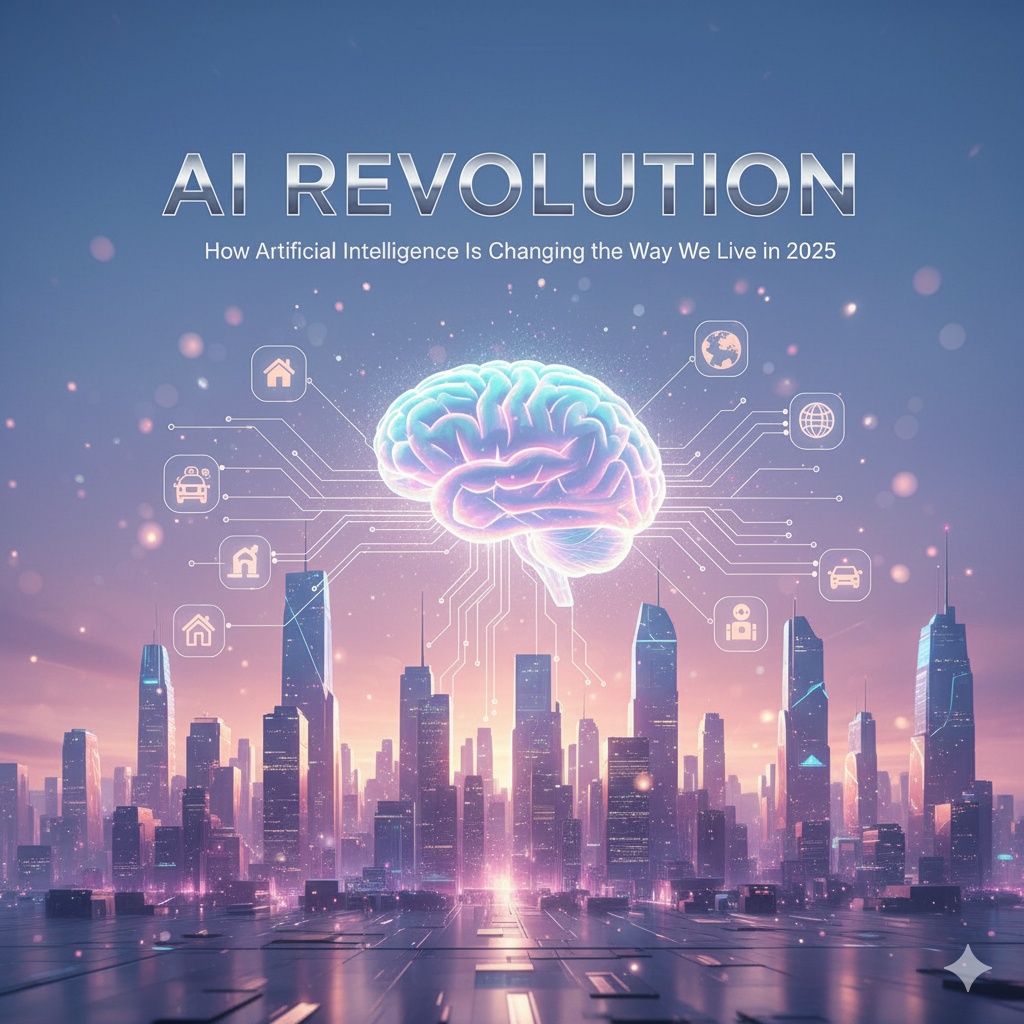
INTRODUCTION
Artificial Intelligence (AI) is no longer a futuristic concept it’s part of our everyday lives. In the future, AI drives everything from smartphones and social media feeds to business decisions and healthcare innovations. It’s not just changing technology; it’s transforming the way we live, work, and think.
The age of AI isn’t coming it’s already here. Understanding it isn’t optional anymore; it’s essential for anyone who wants to stay relevant in today’s fast-moving digital era.
1. AI in Everyday Life: The Invisible Assistant Around You
Every day, you’re surrounded by AI even if you don’t realize it.
When your phone suggests the fastest route to work, when TikTok or Instagram curates your feed perfectly, or when Spotify recommends songs you’ll probably love that’s AI at work.
These systems analyze your preferences, learn from your habits, and predict what you’ll enjoy next. AI quietly personalizes your experience, making life smoother but also shaping your decisions.
From what we buy to what we watch, AI plays a subtle role in guiding our behavior. That’s why understanding how it works is so important. It’s not just a tool, it’s a digital companion influencing us daily.
2. Smarter Work and Productivity: AI as Your New Work Partner
In 2025, professionals across industries rely on AI-powered tools to get more done — faster and smarter.
- Writers use AI to research and spark new ideas.
- Marketers analyze data to predict trends and target audiences.
- Designers generate visuals in minutes using AI image tools.
AI removes repetitive, time-consuming tasks and frees people to focus on creativity and strategy. Instead of replacing humans, AI has become a smart collaborator that helps us perform at our best.
Companies that integrate AI are seeing clear benefits — higher efficiency, improved decision-making, and more engaging customer experiences.
3. AI in Business and Customer Service: The Secret Behind Smart Brands
Businesses of all sizes now rely on AI to understand customers better.
From chatbots handling 24/7 customer questions to predictive analytics that forecast what buyers will want next, AI gives brands a competitive edge.
Even small entrepreneurs can now compete with big companies using AI tools like ChatGPT, Jasper, or Midjourney, creating professional-quality content, visuals, and ads at a fraction of the time and cost.
AI is leveling the playing field, turning creativity and data into the most valuable assets for any business.
4. AI in Education: Personalized Learning for Every Student
Education is being transformed by AI-driven technology. Instead of one-size-fits-all teaching, students now learn through personalized learning systems that adapt to their strengths, pace, and interests.
AI helps teachers, too automating grading, tracking progress, and creating interactive materials. This allows educators to spend more time mentoring and inspiring creativity rather than focusing on repetitive administrative work.
The result? A more engaging, inclusive, and effective education system that prepares students for a tech-driven world.
5. AI in Healthcare: Saving Lives with Smart Data
Healthcare has become one of the biggest beneficiaries of AI.
Today, intelligent systems assist doctors in diagnosing diseases earlier and with higher accuracy. Machine learning models can analyze X-rays or MRI scans in seconds often spotting patterns that humans might miss.
Wearable health devices now track heart rate, blood pressure, and sleep in real time. These tools send early alerts when something’s off, allowing preventive care before serious problems occur.
Hospitals also use AI to manage records, optimize schedules, and predict patient needs — improving speed, accuracy, and outcomes for everyone.
6. The Ethical Side of AI: Power, Privacy, and Responsibility
With great power comes great responsibility and AI is no exception.
Who owns the data? What happens when algorithms make biased or unfair decisions?
AI raises serious questions about privacy, ethics, and accountability.
If trained on biased data, AI can unintentionally discriminate in hiring, lending, or law enforcement. That’s why responsible AI development — emphasizing fairness, transparency, and ethics is crucial.
Technology should always serve humanity, not replace it.
7. The Future of AI: Collaboration, Not Replacement
Looking ahead, AI will continue to evolve from autonomous vehicles and smart cities to environmental monitoring and robotics. But the most successful future won’t be about machines replacing humans.
Instead, it will be about humans and AI working together.
Machines bring speed and precision, while humans contribute empathy, creativity, and judgment. The balance between the two will define progress in the years to come.
The future belongs to those who can blend human insight with machine intelligence using technology not as a crutch, but as a partner.
Conclusion: A Smarter World, Powered by Humanity
Artificial Intelligence has already changed how we live and work making our world more connected, efficient, and intelligent. But its true power lies not in the code or machines, but in how we use it.
If guided by ethics and purpose, AI can help solve global challenges, expand education, and create fairer opportunities for everyone.
The future won’t be entirely human or entirely machine it will be a partnership between both.
By embracing AI wisely, we can build a future where innovation and humanity grow side by side.
Wah, sangat insightfull kak
thanks kak